Background
The Cordillera Blanca, with a total area of 723 km2 of glaciers (Ames et al., 1988), is one of the most extensively ice-covered mountain massifs between the tropics. The Cordillera Blanca comprises more than two hundred summits above 5,000 m and thirty above 6,000 m. Moreover, the glaciers of this range extend further than in any other massif located between the tropics: Bolivia, Ecuador, Colombia, Venezuela, Africa and Indonesia. They represent more than a quarter (26%) of the tropical glaciers. Even before the arrival of the Spanish, judging by the numerous signs of occupation found in the high valleys, the Cordillera Blanca was a humanised massif, as the many pre-Inca archaeological remains confirm. In the Spanish era, Hernando Pizarro and his companions were the first Europeans to visit the Cordillera Blanca during their journey from Cajamarca to Pachacamac. On 14 January 1533 they crossed "heights covered with snow" on the western side of the Rosko range, along the road from Corongo to Huaylas. In the 17th century, the Dominican friar Fray Juan de Meléndez makes a brief reference to the range, recounting his journey from Huaraz to Chavín and Huari, probably passing over the Yanashallash pass (4,700 m), south-east of Huaraz. Later, in 1764, the geographer Cosme Bueno also mentioned it in his report on the catastrophe that destroyed the village of Ancash, caused by an ice avalanche that fell from Nevado Huandoy on 6 January 1725. Years later, in 1793, Mariano Millán y Aguirre published a report on the valley of the Santa river, describing the range. At the end of the 18th century, Tadeo Haenke, a naturalist born in Prague, was sent by the Spanish government to study the flora and fauna of the provinces of Hispanic America. In his description of Peru he describes the Santa valley (Callejón de Huaylas), mentioning the Cordillera Blanca. Antonio Raimondi, the Italian geographer and friend of Peru, was the first scientist to explore Peruvian territory during his expeditions between 1851 and 1869. Raimondi is owed the first complete description of the region, in which, unfortunately, the glaciers are barely mentioned. The first geographical documentation of the Cordillera Blanca came shortly afterwards, with the German geographer E. W. Middendorf, who during his stay in Peru from 1855 to 1888 describes the Santa valley in minute detail, but does not visit the high valleys. He is the first to give summit heights, based on measurements made by the English engineer Hindle, who was working on the railway between Chimbote and Caraz. On 21 June 1883, the hero of La Breña, General Andrés Avelino Cáceres (the Warlock of the Andes), during the war between Peru and Chile, crossed with all his troops the Portachuelo of Llanganuco towards the eastern side of the range. Shortly afterwards the geologist G. Steinmann, the geographer W. Sievers and the botanist A. Weberbauer also visited the area. Knowledge of the Cordillera was nevertheless limited until then to its marginal zones and to its important passes, where passable roads existed. At the beginning of the 20th century, mountaineers from different countries arrived in the Cordillera Blanca with the intention of climbing its summits, above all the colossus Huascarán.
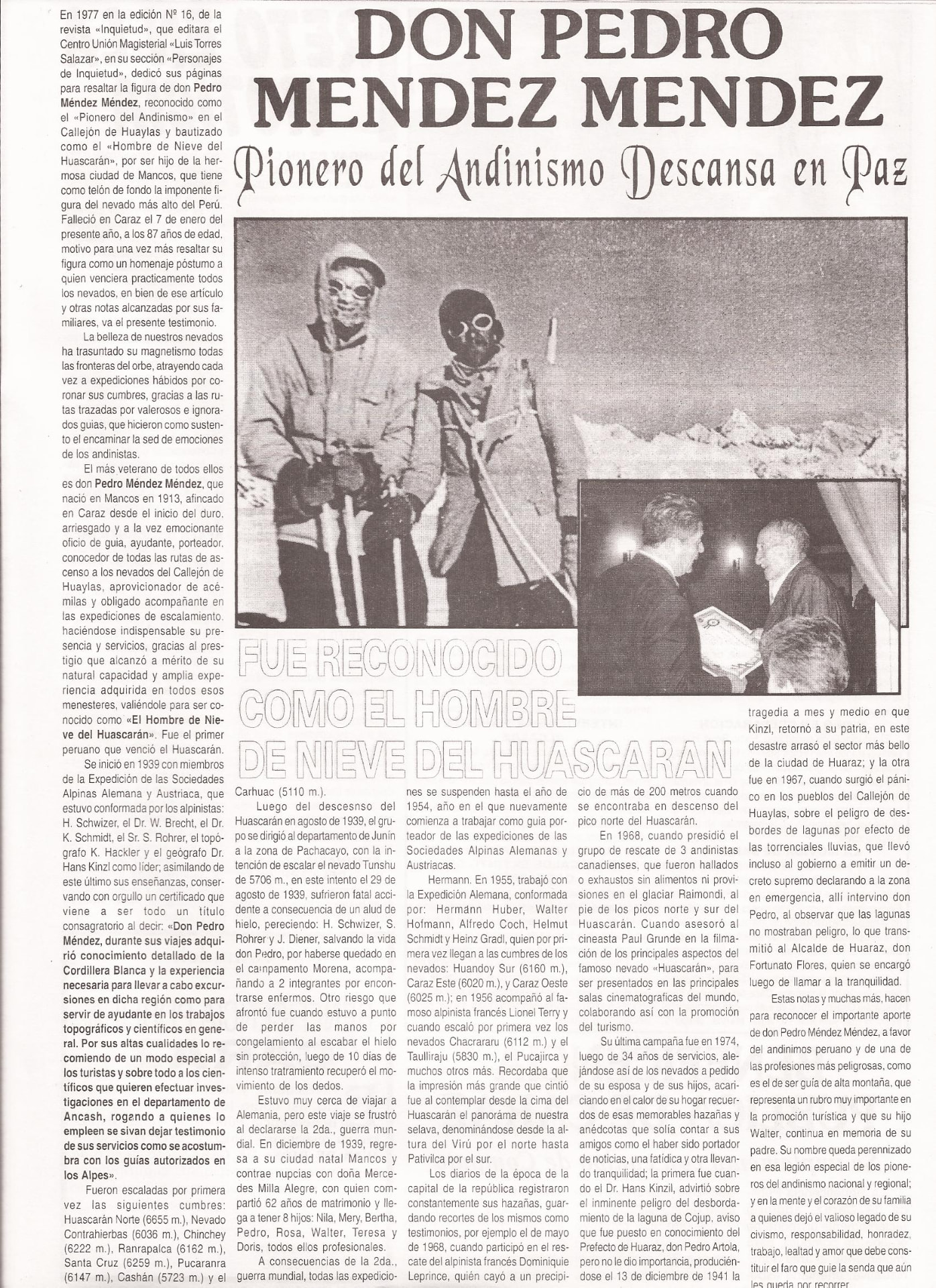
Pedro Méndez, the first Peruvian on Huascarán, and his main ascents
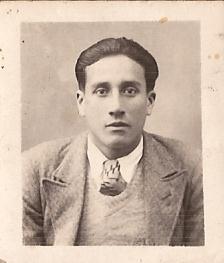
1939: Pedro Méndez, from the district of Mancos, province of Yungay, department of Áncash, begins his mountain activities at the age of 26, with the Austro-German Scientific and Mountaineering Expedition led by Dr. Hans Kinzl. On 25 June of that year they reach the North summit of Huascarán (6,655 m); the party was made up of the geographer Hans Kinzl, Dr. W. Brecht, the surveyor K. Heckler, Dr. K. Schmidt, Mr. Pedro Méndez (Peruvian), Mr. S. Rohrer, H. Schweizer and J. Diener. (The last three died in a fatal accident caused by an ice avalanche on Nevado Tunshu (5,706 m), in the central range of the department of Junín, on 29 August 1939. Their remains rest in the cemetery of the city of Huancayo.) Climbed for the first time by this expedition were the following peaks: the North peak of Huascarán (6,655 m), Nevado Contrahierbas (6,036 m), the main summit of Nevado Hualcán (6,125 m), Tocllaraju (6,032 m), Palcaraju (6,274 m), Nevado Chinchey (6,222 m), Ranrapalca (6,162 m), the main summit of Nevado Santa Cruz (6,259 m), Pucaranra (6,147 m), Nevado Cashan (5,723 m) and Carhuac (5,110 m).
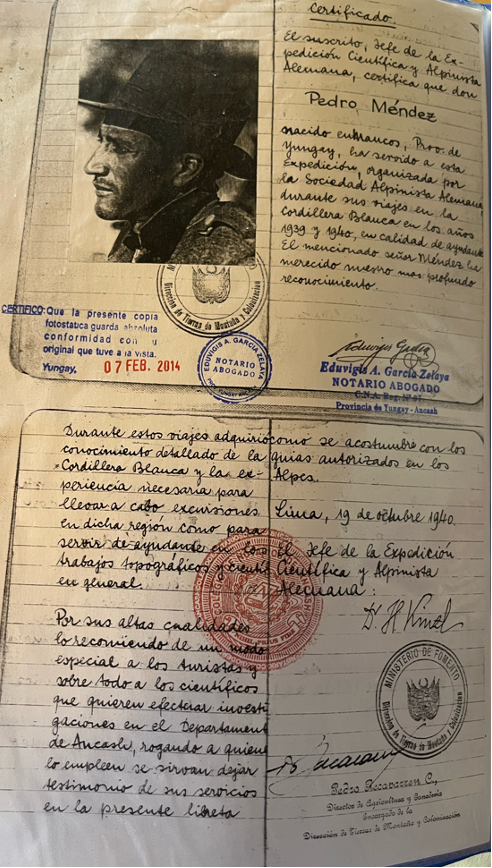
1940: Dr. Hans Kinzl, head of the Austro-German Scientific and Mountaineering Expedition, and Mr. Pedro Recavarren C., Director of Agriculture and Livestock of the Ministry of Development — Directorate of Mountain Lands and Colonisation, present Pedro Méndez with a Mountain Guide Logbook, in which any person or expedition employing his services is to record the work carried out by Mr. Méndez, as is customary for authorised guides in the Alps.
1951: The Franco-Belgian Expedition arrives in the Cordillera Blanca, supported and sponsored by the Belgian Alpine Club, the French Mountaineering Federation, the French Alpine Club and the Directorate General of Sport. After reflection, they chose as their First Ascent a virgin mountain of 6,000 metres, situated between the Huandoy massif and Nevado Chacraraju, until then without a name. At 11:30 on 13 July 1951, they reach the summit of the mountain that until then had no name; the group was formed by Claude Kogan, Georges Kogan, Raymond Leininger and Maurice Lenoir. On the night of 14 July, the whole group, including the Belgians René Mallieux, André Mallieux and Jacques Jongen, gathered around a campfire to celebrate the French national holiday and the ascent of the mountain; they wanted to celebrate with something and remembered the bottle of Pisco they had not bought, which was on sale in every town. And so they decided to give the first mountain they climbed the name "Nevado Pisco". In the Llanganuco valley they part from Raymond and Jacques, who go down to Monterrey to meet Nicole, who had just arrived from Paris. The rest of the group, without good planning, decide to climb Nevado Huascarán. They cross the mountain and, after many difficulties, reach a camp at 4,200 m, close to the Huascarán glacier. And it is here that the Second Adventure begins: now it is Nevado Huascarán. Pedro Méndez and three more porters are hired by the Belgian René Mallieux, Vice-President of the Belgian Alpine Club and member of the Franco-Belgian Expedition to the Andes, to take part as porters in the expedition to Huascarán Sur. This expedition fails in its attempt. On this, Georges Kogan writes: "The failure on Huascarán has served as a lesson for us. We accept that we made a mistake; we wanted to attack Huascarán in a single push, as one does in the Alps, without good logistics and without good preparation. We realised that it is a team effort." After this experience, the expedition continues its programme of ascents in the Cordillera Blanca, now heading for the north face of Alpamayo, entering through Colcas. On 13 August 1951, at 7 p.m., after eleven hours of climbing, the following reach the North summit of Alpamayo (5,947 m): Georges Kogan, Maurice Lenoir, Raymond Leininger and Jacques Jongen. On 16 August 1951, Nicole Leininger, Claude Kogan, Raymond Leininger and the Peruvian Fortunato Mautino, supported by the porters Felipe Mautino, Danielo and Tiburcio, reach the summit of Nevado Quitaraju (6,036 m) at 3 p.m. The ascents of Nevado Pisco, Alpamayo and Quitaraju were published in the book written in French by Georges Kogan and Nicole Leininger, titled "Cordillère Blanche", in 1952.
1953: On 4 August 1953, the brothers Apolonio, Guido and Pedro Yanac, the brothers Fortunato and Felipe Mautino, and Macario Ángeles, members of the Club Andinista Cordillera Blanca of the city of Huaraz, Áncash, reach the summit of Nevado Huascarán Sur (6,768 m). Mr. César Morales Arnao, organiser of the expedition, and his collaborators only reached the Raimondi Glacier (5,200 m).
1954: Dr. Hans Kinzl, head of the Scientific and Mountaineering Expedition of the Austrian Alpine Society, signs an entry in Pedro Méndez’s Guide Logbook in recognition of the good work carried out in the mountains during the 1954 season. This expedition consisted of Dr. Hans Kinzl as group leader; Dr. Heinz Löffler, who together with Dr. Kinzl formed the scientific group; Dr. Walter Hoffmann, in charge of the large-scale survey of Nevado Huascarán; and other climbing participants. The survey team went to the Cordillera Blanca to carry out the large-scale survey of Nevado Huascarán, work carried out in the months of June and July 1954. The climbing team made the following First Ascents in the Huayhuash range: Nevado Tsacra Chico (5,564 m), Nevado Tsacra Grande (5,774 m), the two peaks of Nevado Puscanturpa (5,652 m and 5,550 m), Nevado Sarapo (6,143 m), Nevado Yerupajá Chico (6,120 m), Nevado Jirishanca Chico (5,467 m) and Nevado Ninashanca (5,637 m).
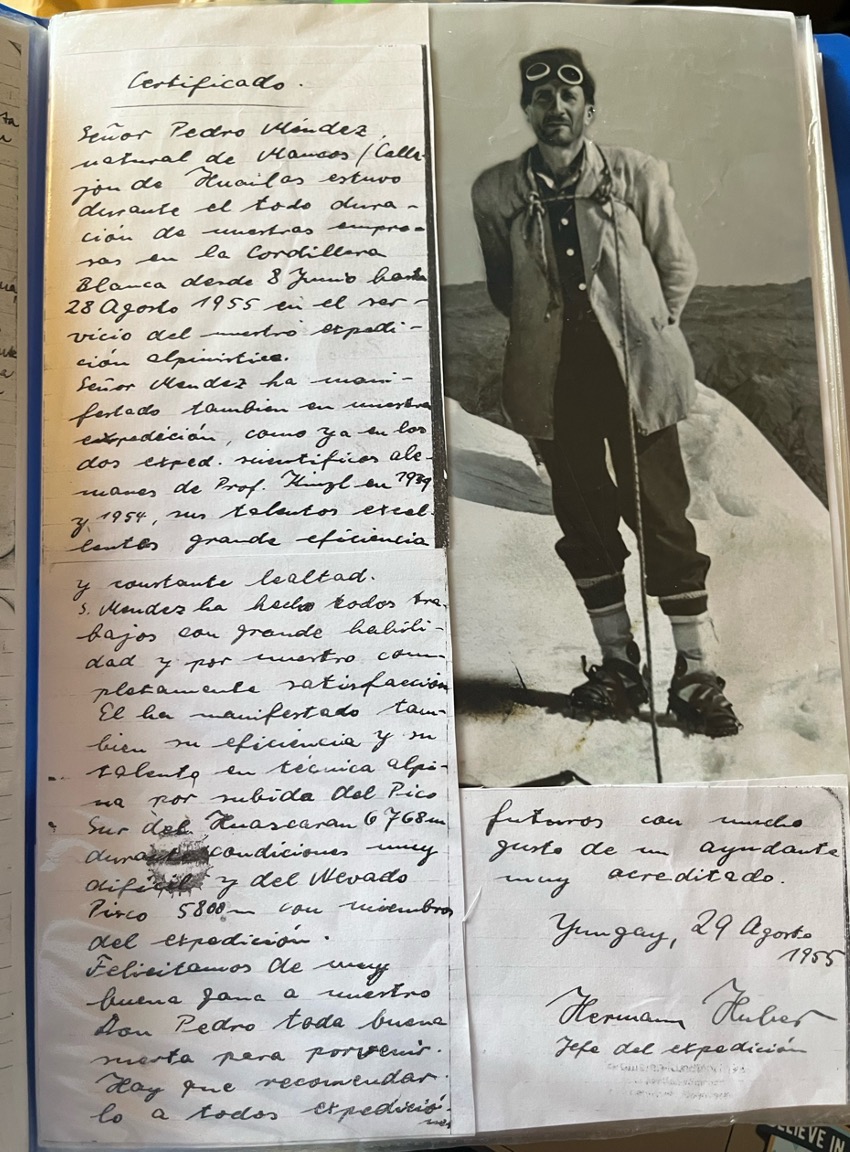
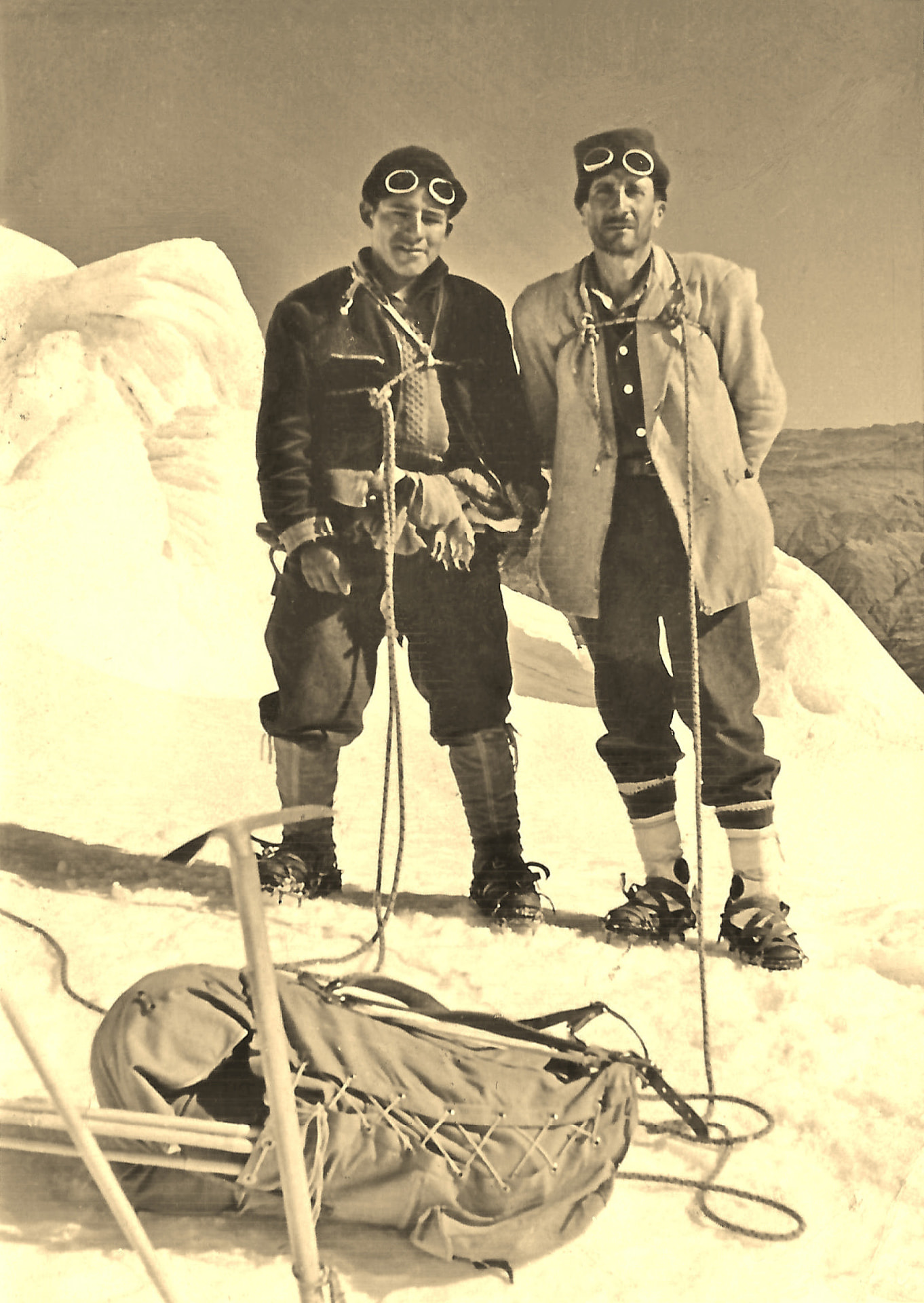
1955: Hermann Huber, head of the Austro-German Expedition, left an entry in Pedro Méndez’s Guide Logbook and congratulated him on the good work carried out during the 1955 season, and on the ascents of Nevado Pisco (5,800 m) and Huascarán Sur (6,768 m) in very difficult conditions. The 1955 expedition consisted of Hermann Huber, Alfred Koch, Helmut Schmidt, Heinz Gradl and the Peruvians Pedro Méndez and Guillermo Morales. They climbed the peaks: Huascarán Sur (6,768 m), Caraz I (6,025 m), Huandoy South peak (6,160 m), Huandoy West peak (6,395 m) and Huandoy North peak (6,000 m).
1956: Pedro Méndez organised all the logistics and took part in the French expedition led by Lionel Terray, made up of M. Davaille, C. Gaupin, R. Jenny, M. Martin, R. Sennelier and P. Sauriac, who climbed for the first time the peaks Taulliraju (5,830 m) and Chacraraju Oeste (6,112 m). The book "Les Conquérants de l’inutile" (The Conquerors of the Useless) was published in 1961, in two volumes.
The Méndez family archive